Estimados interesados, me jubilé de la actividad de venta inmuebles.
Dear page visitors, I retired for the time being from my real estate activity.
Felices fiestas!
Season’s Greetings!
Asuncion Dec.2014
M e r c o A g r o real estate Paraguay South America farmland properties for sale
Offers virgin land in the Chaco - estancias ranches farms - agriculture investments

CP1544 Asuncion, Paraguay
EMAIL
Paraguay mobile
+595-984-875014
farmland realtor
since 1997
Emphasis is on raw undeveloped fertile land. We believe it offers the best leverage for land appreciation.
And we believe that the Paraguay Chaco currently offers the best opportunities within Latin America.
We offer properties in the following regions and categories :
A. undeveloped virgin (native) forest properties in the Chaco boreal (Alto Chaco)
While the Chaco in geographic terms also encompasses parts of Bolivia and Argentina we are referring here to the western half of Paraguay, extremely sparsely populated and traversed by only few roads. The central, western and northern parts belong to the semi arid tropics with annual precipitations between 550 and 1000 mm, vegetation being low scrub on sandy soils in the dry (550 mm) utmost west, developing into semi dry higher impenetrable forest on fertile sedimentary loamy soils, well drained, in the central N-S belt of the central and northern Chaco (700-1000mm rainfall).
Productive potential and environmental considerations :
Most of the central and northern Chaco Boreal makes for good cattle pasture when the natural forest cover is cleared and artificial pasture sown (intensive grass feeding). Soil properties in general and rainfall partly, namely in the North East, Agua Dulce, are suitable for crop production, too. However today, distances, lack of proper roads and infrastructure make it not economically viable yet.
Clearing natural forest to convert land into cattle pasture is controversial due to its effect on the global carbon balance and climate change, bio diversity loss and soil erosion concerns.
A consideration might be beef possibly needing eco certification to be marketable in the first world some time in the future and beef from cattle grazing on deforested land failing to get certified.
Land banking and carbon credits :
The biomass obtained in form of forest with 1x hectare land purchased, probably for fills a more valuable task then 1x cow does, producing beef while grazing on 1x hectare deforested land. A property owner, who has maintained his forests, will probably at one point get paid for that.
1x hectare dense virgin Chaco forest, costing US$200, might store in the range of 200 tons of Carbon, it may sequester in the range of 2 tons per year, though such estimates are far from exact. Carbon credits (1t CO2e) traded in the US$15-25 range over the last 2 years. Presumed a global scheme of trading "avoid deforestation credits" (REDD) will be established within the next couple of years, a fair guess is that one such hectare could generate an annual income of US$40 (10% p.a.) plus appreciations. A voluntary market for REDDs, still lacking proper standards, does exist already as of June 2010 ECONOMIST article "hostage to fortune" and
"money grows on trees"
A recent example of what might be expected for the near future: The Paraguay Forest Conservation Project of Swire Pacific Group aiming at creating that group's positive carbon credit balance, highlighting the potential demand for virgin forest properties.
The Chaco’s general remoteness is a limitation when you want to work the land, it can be a welcome feature when your approach is land banking. Virgin land properties do not require any attention, the ones we list here are in areas (still) sufficiently remote to be left completely alone without risking squatters.
B. cattle ranch properties in the Bajo Chaco
The South and the East parallel to the Rio Paraguay river belong to the semi humid tropics with rainfall between 1000 and 1400 mm, vegetation mostly being a more open high grass and palm tree savannas on heavier improperly drained lowland soils, with inlays of more elevated lands, with dense forest and well drained lighter agricultural soils.
Cattle ranching is done in the Bajo Chaco profitably and more environmentally viable than above, both extensively on natural rangeland (cow/calf) and more intensively on sown pasture (grazing/fattening) with no need to cut palm trees when sowing. It is likely that rice farming will at one moment make inroads into the region.
The Chaco is not for the family farmer
Buyers are typically land bankers, agro corporations, individual farmers residing in Asuncion or abroad. The extreme remoteness, lack of schools, shops, villages makes it rather sacrificing for families to live in the Chaco.
Transactions, restrictions, taxes
foreign landownership is not restricted in any way,
a public registry of property titles exists.
transaction costs :
buyer commission : 3% of sales price
notary fees, stamp fees, taxes : 2% of sales price in total
property taxes : example - 4000 hectare land consisting of virgin forest, as of 2012, US$500 annually.
Taxes, general : personal income tax 10% (though parliament suspended income tax completely during recent years), 10% VAT/sales tax
Property descriptions do not always contain images, the images in the column to the right might give a general first idea.
Access by earth road can become ardous during rainy season, November-March, you do have, however, always the possibility to review properties by chartered plane. The sheer size of properties make this viable in any case.
further reading here - farmland as inflation hedge
MercoAgro
mail@ventacamposparaguay.com
.
some occasional update and news bit also viewable as farmland newsfeed

.
12-2014
British President Energy Plc made Paraguay’s first major oil discovery in the Chaco basin. The discovery of light oil in the Lapacho well is expected to have commercial potential, and may hold about 200 million barrels of oil equivalent, it said.
10-2014
Paraguay's 2014 beef exports will be some 355.000 tons carcass weight (USDA estimate), making Paraguay rank 7th among the world's beef exporters for the first time
02-2013
Germany's SPIEGEL magazine reports on 19.Feb.2013 that EU will take measures to substantially reduce supply of carbon offset certificates, in that way increasing their market price and hence the incentive to reduce emissions altogether ( Emissionshandel: EU will CO2-Zertifikate drastisch verknappen )
02-2013
Germany's Kreditanstalt für Wiederaufbau (KFW) investment arm DEG says it will invest some €25m in the paraguayan agricultural sector thru a partnership with Rioforte, the agricultural corporation
01-2013
Though land prices in the Paraguay Chaco continue to rise 20% annually, there is a strong interest by foreign investors in land and farming investments, notably Uruguayan ranchers, say sources from the Chaco ranching sector. Buyers are less and less speculators, but rather agro producers who develop and start producing. Land in the Chaco produces on average 170 kg beef life weight per Hectare per year compared to 100kg in Uruguay (a country where land prices are five times higher),
reports this article of Uruguay’s major newspaper El Pais on 14.Jan.2013 (in Spanish)
“Ganadería guaraní sigue captando más inversores”
http://www.elpais.com.uy/130114/pecono-688284/rurales/ganaderia-guarani-sigue-captando-mas-inversores/
01-2013
market update 31.Jan.2013
President Lugo being impeached by the Paraguayan parliament in June 2012 seems to have made non-Latin-American foreign investors more reluctant to invest for the moment, at least until the 2013 elections bringing a government to office who’s legitimacy won’t be questioned abroad. Latin American investors, namely Brazilians, Uruguayans, Argentineans invest as strongly in land in Paraguay as in previous years. Land prices rose some 15% annualised in recent months.
Weakness of the US$, in which prices are quoted, is adding to the upward tendency
09-2012
Paraguay’s ABC-Color newspaper reports on September,4th 2012
on agricultural players perceiving Paraguay, together with Ukraine, as the last countries with substantial potential for agricultural expansion (paraguay-y-ucrania-los-de-mayor-potencial-de-crecimiento-agricola)
06-2012
market update 19.June.2012
Prices for farmland and virgin land rose some 10% over the last 6 month in the Paraguay Chaco, supply remains relativly scarce,
a number of properties being withdrawn from the market is adding to that effect. Expectations from half a year ago, that a local outbreak
of Foot+Mouth Disease, while indeed depressing cattle prices somewhat, would lead to lower land prices, did not materialise.
Most foreign buyers come from neighbouring South American countries, Brazil, Uruguay, Argentina, this being an indicator that Paraguay still offers the region’s best price/value in farmland.
pre-2012
Paraguay Ministry of Commerce /Riedex reports that the Karanda'y palmtree's (which covers huge areas of the eastern Chaco as native tree) suitability
as Biodiesel crop is currently studied. The palm's seeds have a high content of non edible oil.
pre-2012
A bit older Barron’s cover story about farmland, with Marc Faber on arbitrage opportunities in farmland-rich Russia, Paraguay and Uruguay
property listings - land for sale
(ha = 1 hectare = 2,47 acre, buyer's commission : 3%subscribable here : farmland newsfeed
A.Alto Chaco - mainly raw land virgin forest
4.000 hectare
US$280,-/ha, US$ 1.120.000
soils sandy/loamy of high fertility
1000 mm annual rainfall, potentialy sweet ground water
virgen semi dry high forest w.some hard wood, access thru cleared strip/track
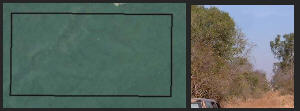
4.000 hectare
consisting of 2x lots at short distance to each other
US$160,-/ha, US$ 640.000
soils sandy/loamy of medium fertility
850 mm annual rainfall
virgen semi dry forest and bushland w.some hard wood. Properties form long narrow rectangle with short front to Region´s only (semi permanent) river, Rio Timane, access thru cleared strip/track, one modest building + fencing
3700 hectare
US$650,-/ha, US$ 2.405.000
1.200mmm annual rainfall, potentially sweet ground water
Virgin. In its totality loamy/sandy fertile sedimentary soils covered by high semi dry forest (w.some hard wood)
access by minor earth road/track.
5120 hectare
US$1100,-/ha, US$ 5.632.000
1.200mmm annual rainfall, potentially sweet ground water
In its totality loamy/sandy fertile sedimentary soils
access by earth road/track,
3200 ha cleared, of those are 2500 ha sown pasture, perimeter fence, 10 fenced subdivisions with water supply, farmstead with barns, airstrip
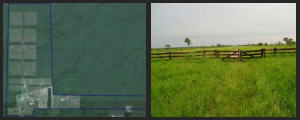
4000 hectare
US$900,-/ha, US$ 3.600.000
-SOLD-
3500 hectare
US$400,-/ha, US$ 1.400.000
1.200mmm annual rainfall
50% elevated parts, loamy/sandy fertile sedimentary soils, covered by virgin high growth semi humid natural forest, 50% lowlands serving as natural cattle pasture , being wetlands in rainy season
Perimeter fence, 800 hectare cleared for pasture, on region’s main (earth-)road, 10 km distance to region's only riverport
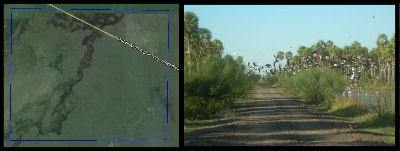
2500 hectare
US$560,-/ha, US$ 1.400.000
1.000mmm annual rainfall
on the fringe of macro region of sweet groundwater. In its totality loamy/sandy fertile sedimentary soils, rich in N + P. Covered (where not cleared) by virgin semi high to high growth semi humid natural forest
400 ha cleared and sown with artificial pasture (Gatton Panic) with its corresponding tree lines as wind shields, rain water reservoir 17000qm supplying 2x drinking troughs, 14 km internal and perimeter drive ways. Approved plan of development would allow to deforest and develop further 1100 ha, 1500 ha in total
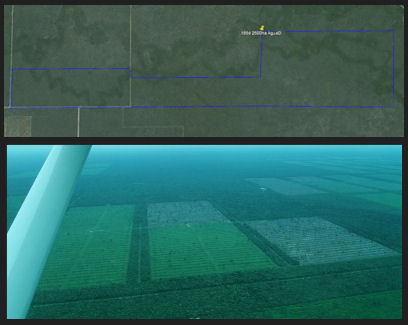
8300 hectare
US$650,-/ha, US$ 5.395.000
1.200mmm annual rainfall
on the fringe of macro region of sweet groundwater. In its totality loamy/sandy fertile sedimentary soils, rich in N + P. Covered by virgin semi high to high growth semi humid natural forest
Raw land (no fencing, no infrastructure), 30 km north of region’s main (earth-) road
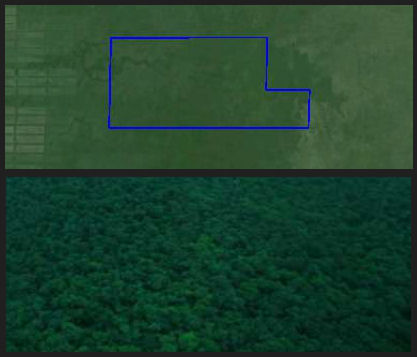
2880 hectare
US$750,-/ha, US$ 2.160.000
1.200mmm annual rainfall
region of sweet groundwater, 75% of land being slightly elevated w. lighter loamy/sandy fertile sedimentary soils, rich in N + P. Covered by virgin high growth semi humid natural forest. 25% being lowlands with heavyer soils, covered by a more open savannas type veget. serving as natural cattle pasture , aptos para cultivos y/o praderas artificiales, cubierto (donde no desmontado) por monte virgin denso, semi alto, semi humido. en un 25% fraciones bajas con suelos mas arcillosos, con una vegetacion natural mas abierto, tipo savana de palmeras de uso pastura natural extensiva.
Perimeter fence on 40/50% of length, 300 hectare cleared w. pasture, modest farmstead, on region’s main (earth-)road, close to region's only riverport
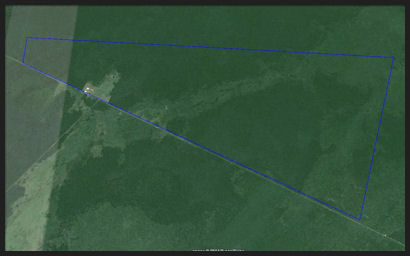
B.cattle farms - Bajo Chaco + Central&West
4500 hectare
US$550,-/ha, US$ 2.475.000
mainly lowlands with open palmtree vegetation, w. fractions seasonably briefly flooded hence having fertile river sedimentary soils,
1300 mm annual rainfall, bordering offer 118a
C. Central&West, cattle farms
2600 hectare
US$ 550/ha , US$1.320.000
-SOLD-
8.000 hectare (remaining fraction)
US$ 750/ha , US$6.000.000
700mm anual rain fall, sweet ground water, lighter sandy good fertility soils
operative cattle farm with 20% cleared land with implanted pasture
remaining land medium growth natural semi dry forest
3.600 hectare
US$ 800/ha , US$2.880.000
650mm anual rain fall, sweet ground water, lighter sandy fair fertility soils
600ha cleared land with sown pasture, remaining endeveloped land covered by virgin medium growth natural semi dry forest
5.000 hectare
US$ 950/ha , US$4.750.000
-SOLD-
5.000 hectare
US$ 850/ha , US$4.250.000
650mm anual rain fall, sweet ground water, lighter sandy fair fertility soils
working cattle ranch, on 1400 ha cleared land with implanted pasture,farmstead, etc
remaining land 3800 ha medium growth natural semi dry forest
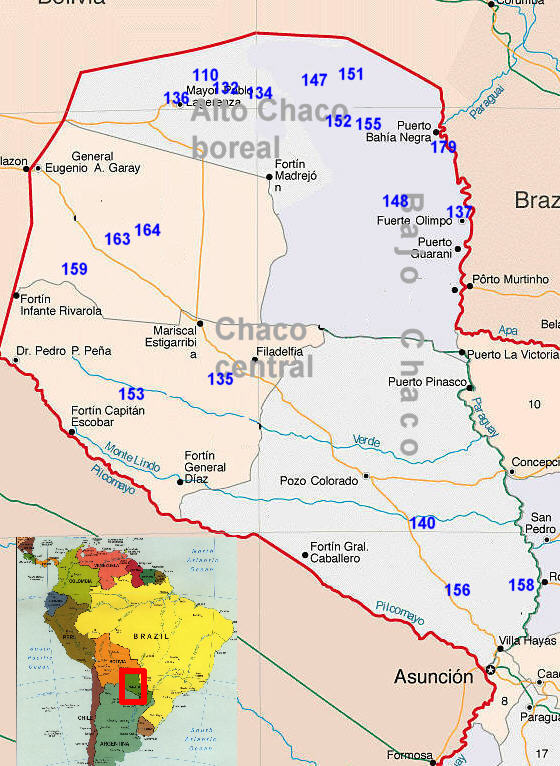
click on map to enlarge
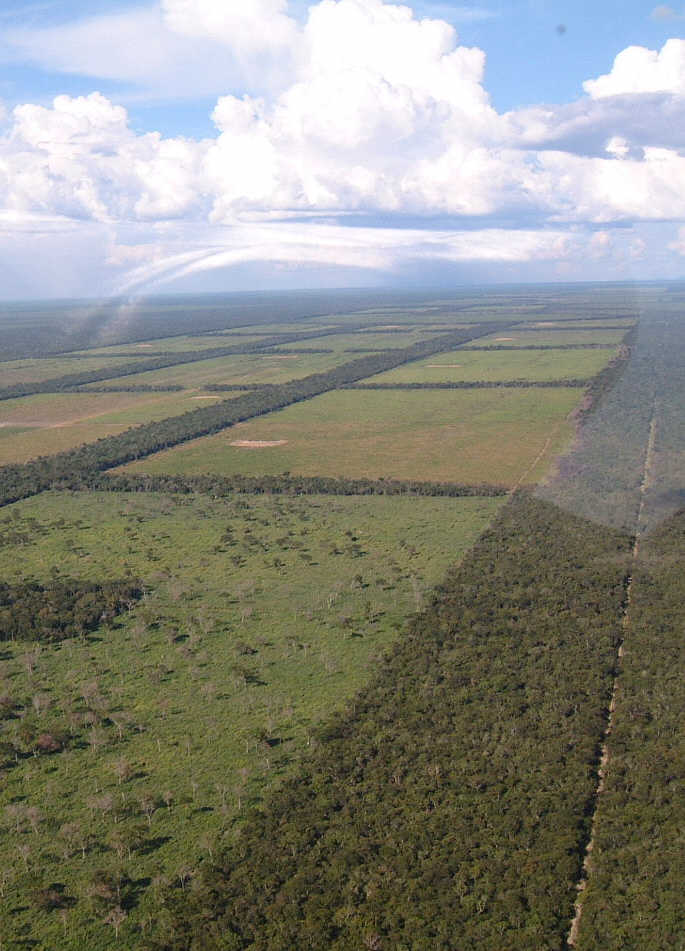
Chaco Boreal in wet season, advance of agriculture, Agua Dulce area
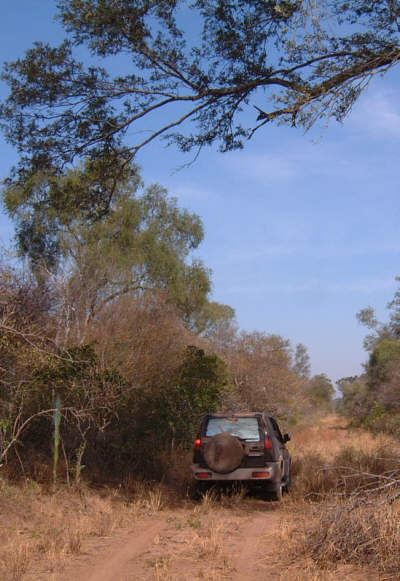
virgin forest Chaco Boreal in dry season, Palmar de las Islas
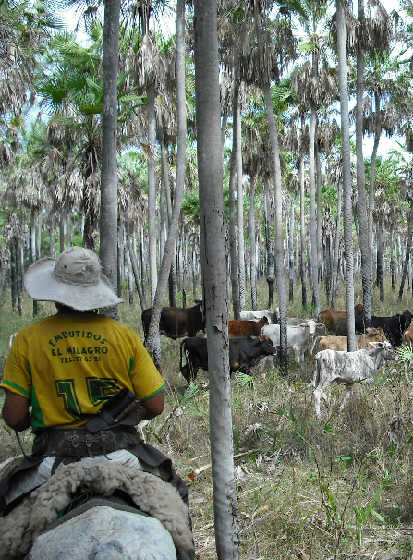
extensive cattle ranching, note the Karanda'y palm tree native forest, interestingly this palm tree's suitability as a Bio Diesel plant is currently studied
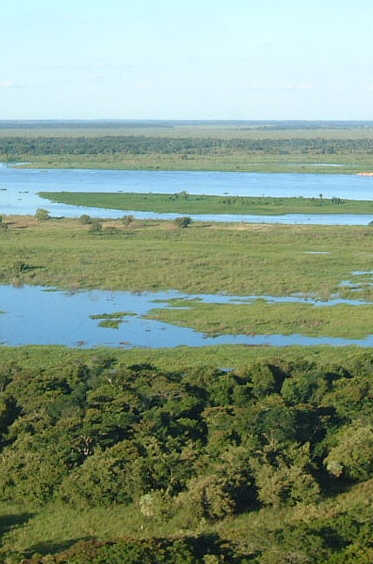
Rio Paraguay, southern Chaco
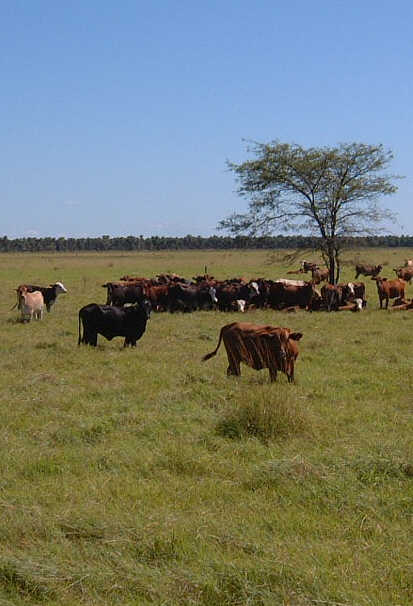
cattle on improved pasture
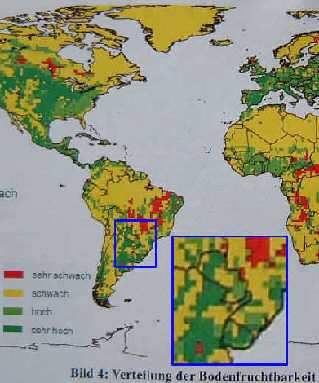
global soil fertility, dark green indicates highest fertility
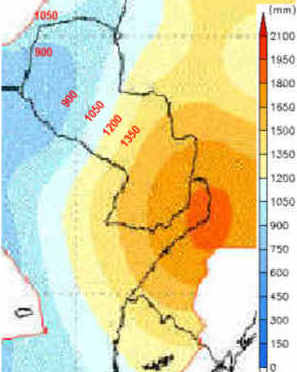
Paraguay anual precipitations
however rainfall in the northern Chaco proved to be higher over last two decades
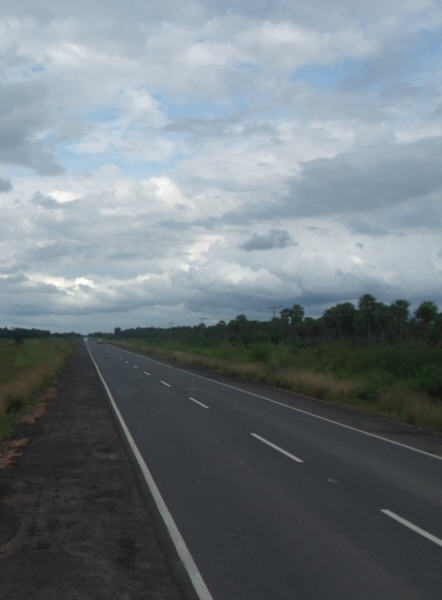
the Trans Chaco Highway (ruta 9) for the time being the only paved road in the Paraguay Chaco, having frontage is a significant feature for a farm property
mail@ventacamposparaguay.com
Site content reflects the personal understanding of the matter by the author.
Author does not guarantee its correctness and may not be held liable for it.
Property descriptions are from sources deemed reliable but not guaranteed by the broker.
Properties are subject to prior sale, price change, correction or withdrawal.